
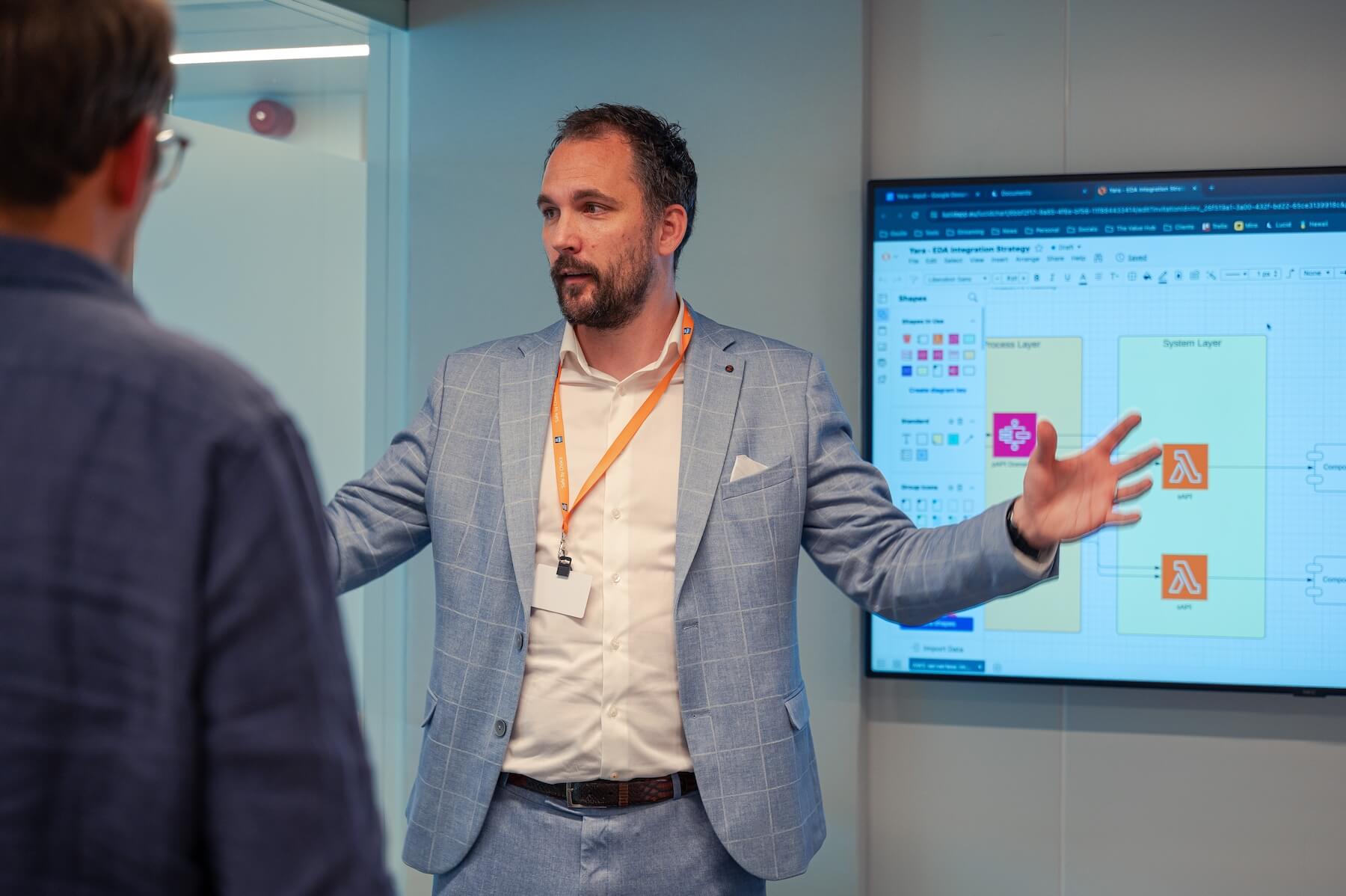
When people hear the title “Business Architect,” they usually picture someone staring at abstract diagrams, throwing around heavy buzzwords, and offering solutions that look great on paper but fail in the real world. At The Value Hub, we see it differently. For us, architecture isn’t about looking smart, it’s about people, clarity, and turning big ambitions into things that actually work.
To give you an honest look at what that means in practice, Axel, Business Architect and team lead at TVH, takes us through a typical day in his world.
1. Finding zen in the morning chaos
My day rarely starts with high-level strategic thinking. With two young kids (ages 5 and 8) at home, mornings are a high-stakes contact sport involving lost shoes, spilled milk, and the daily miracle of getting everyone out the door on time.
Juggling family life and training as a triathlete has taught me a lot about patience, pacing, and staying cool when things inevitably go wrong. As it turns out, those exact skills are remarkably useful in business architecture. By 08:00 AM, with the kids safely delivered to school, I grab a fresh coffee and open my laptop on-site at a client. That quiet moment, clearing quick emails before anyone needs me, is about as close as I get to pure zen.
2. Bringing order to the room
A big part of my morning is spent around a table with a client’s IT managers, CIO, and domain leads. They recently went through a major merger, and you can practically feel the tension. Everyone is trying to defend their own territory, and everyone has a completely different idea of what the future should look like.
This is where the real work happens. It’s not about acting like the smartest guy in the room or presenting a 50-slide deck. It’s about listening, asking slightly uncomfortable questions, and bringing everyone back to the big picture. When priorities clash, my job isn’t to play the expert with all the answers, it’s to align the room so we can move forward as one team. And before everyone forgets what we agreed on, I turn those whiteboard scribbles into a concrete plan so people actually know what to do next.
3. Listening first, pitching Later
After a quick drive home for the afternoon, I switch to remote mode for an intake call with a potential new client. We’ve all gotten used to the virtual setup, complete with the classic “Wait, you’re still on mute” moments and awkward video-grid small talk, but the goal remains the same: real human connection.
It’s always tempting to jump straight into “solution mode” and brag about all the cool stuff we can build. Instead, I force myself to just listen. We spend an hour unpacking their daily frustrations. You simply can’t fix a problem if you haven’t taken the time to understand why it’s breaking in the first place.
I finish the day working on a keynote presentation for an upcoming conference. Whether I’m talking to C-level executives or hands-on developers, I refuse to inflict dry theory on anyone. I love taking complex topics, stripping away the fluff, and making them clear enough that people actually want to build something with them.
Leading by lifting others up
As a hiring manager at TVH, I run the team the same way I run my projects: with servant leadership. I don’t micromanage. Mainly because I don’t have the energy for it, but mostly because it doesn’t work. My job is to give you clear direction, clear away any roadblocks in your path, and then step back so you have the trust and autonomy to do your best work.
We care about reaching the right result together as a team, not about who gets to take the credit. I get my energy from curious people who take initiative, own their work, and aren’t afraid to challenge each other (or me) to grow.
Interested in a job as a Business Architect? Apply here.